


Assurant Insurance Medical Billing Compliance Pitfalls
Introduction
Assurant Insurance medical billing compliance demands strict adherence to published guidelines, file format specifications, and narrative detail standards. When examining common compliance pitfalls in medical billing with Assurant Insurance, it's essential to consider the patterns observed across various carrier guidelines. For instance, one recurring issue is the rejection of entries related to travel, intra-office conferences, and administrative time billed at attorney rates.
The 2026 CLM Litigation Management Study found that non-compliance with litigation guidelines and billing practices, excessive billing, and billing disputes are among the most commonly mentioned reasons for outside counsel termination. Managing divergent billing and file-handling guidelines can create a significant compliance burden across multiple carriers and divisions. Administrative overhead seen as pulling talented attorneys away from case work is cited as a direct driver of talent attrition from insurance defense.
The stakes are high. A single invoice rejected for block billing or unsupported UTBMS codes can delay payment by weeks. Repeated violations can lead to removal from a carrier's panel. Understanding what triggers a rejection, how to read a reduction code, and how to structure a line item that passes review is not optional—it is the cost of doing business in insurance defense.
This article examines the compliance pitfalls that appear most frequently in carrier bill review, the structural reasons they persist, and the steps firms can take to align their billing practices with carrier expectations. For firms looking to refine their approach, reviewing attorney billing descriptions that pass carrier review provides concrete examples of narrative detail standards in practice.
Problem Statement
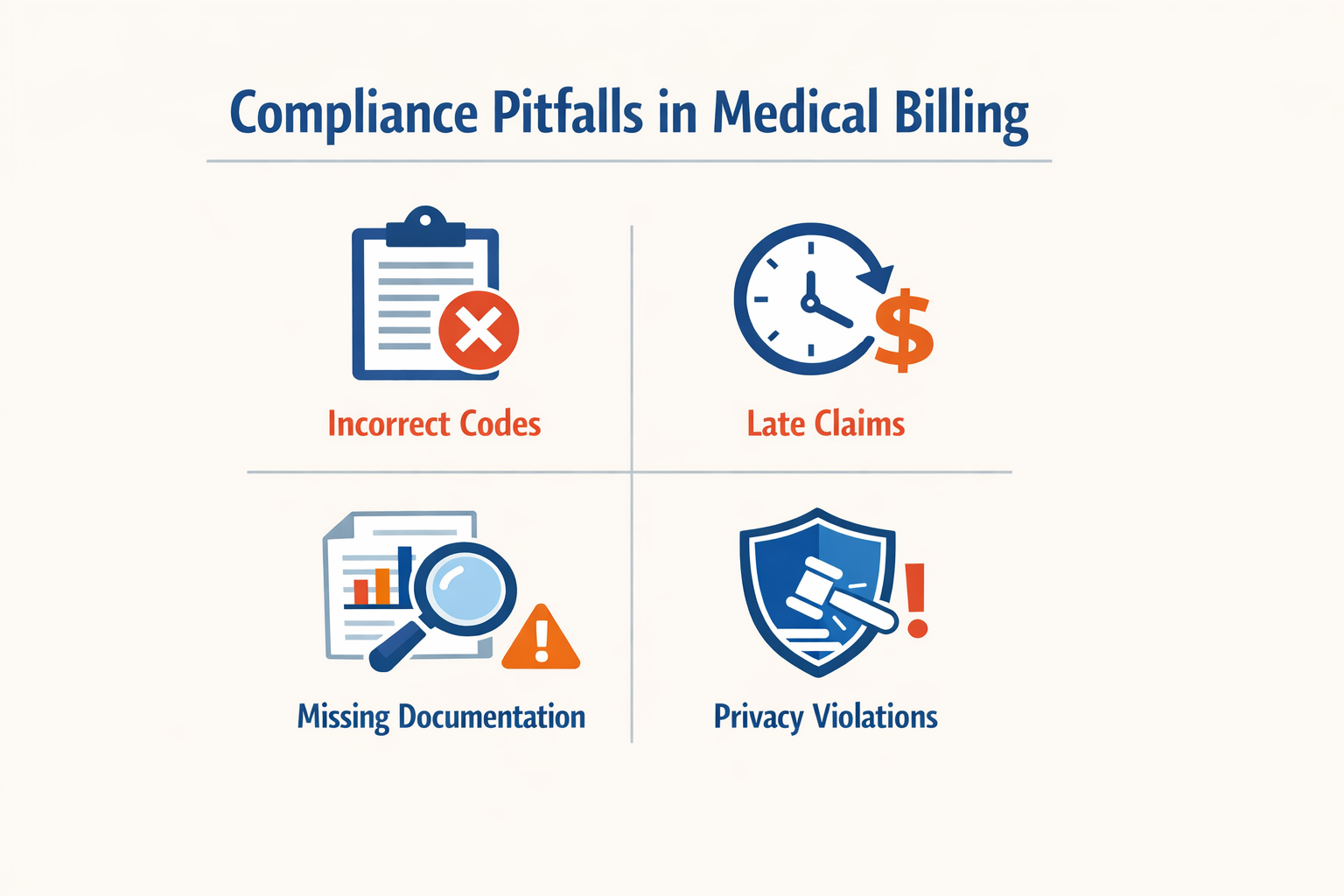
Medical billing practices that align with one carrier's guidelines often fail when submitted to another. Managing divergent billing and file-handling guidelines creates a significant compliance burden across multiple carriers and divisions, according to the 2026 CLM Litigation Management Study. The study identifies administrative overhead as a factor pulling talented attorneys away from case work, with guideline complexity cited as a direct driver of talent attrition from insurance defense roles.
The Noncompliance Penalty
Noncompliance with carrier guidelines results in nonpayment. The Rhode Island Supreme Court Ethics Advisory Panel noted in Opinion 99-18 that certain guidelines identify reimbursable expenses, hourly rate schedules, permitted legal services for which compensation will be made, and activities for which compensation will not be made. Billing statements must be detailed and must adequately describe the services provided. When an invoice fails to meet these requirements, the carrier rejects the line item or reduces the amount paid.
Common Rejection Triggers
The 2026 CLM study reports that failure to follow guidelines and billing practices ranks among the most commonly mentioned issues in carrier-counsel relationships. Excessive billing, overbilling, billing disputes, and unethical billing practices appear repeatedly in survey responses. These are not isolated complaints — they reflect systemic friction between how firms track time and how carriers define compensable work.
Block billing is one of the most frequent rejection triggers. A single entry reading "research case law, draft motion, confer with client, 3.5" violates the narrative-detail standard in most panel guidelines. The carrier cannot determine which portion of the 3.5 hours applies to research, which to drafting, and which to the conference. Without that breakdown, the entire entry is subject to reduction or rejection.
Ethical Concerns and Professional Judgment
The use of litigation management guidelines by insurance companies raises ethical concerns among legal professionals. The Ohio Board of Commissioners on Grievances and Discipline stated in Opinion 2000-3 that the primary ethical concern is whether compliance with the guidelines interferes with the independent professional judgment of insurance defense counsel and consequently with the quality of legal services provided. The Rhode Island panel acknowledged this tension, noting that if a firm believes any part of the billing requirements is inappropriate or would not be in the best interest of the insurer or its insureds, such issues must be discussed with the insurer or its designee.
The primary ethical concern is whether compliance with the guidelines interferes with the independent professional judgment of insurance defense counsel.
This creates a compliance dilemma: the lawyer must satisfy the guideline to receive payment, but the guideline may impose restrictions that conflict with the lawyer's duty to the client. When the carrier paying the bill is not the client receiving the representation, the attorney faces competing obligations that no billing software can resolve.
Administrative Overhead and Talent Attrition
The administrative burden of tracking multiple guideline versions, formatting invoices for different e-billing portals, and responding to reduction codes consumes time that would otherwise go to case work. The 2026 CLM study identifies this overhead as a driver of talent attrition from insurance defense. Attorneys leave panel rosters not because the work is uninteresting, but because the billing compliance layer makes the work unsustainable.
Carriers update their guidelines on different schedules, and not all carriers publish a version number or effective date on the document itself. A firm managing work for five carriers may be operating under five different sets of rules for what constitutes a compensable conference, a reimbursable expense, or an acceptable billing increment. When the guidelines conflict, the firm must track which rule applies to which matter — and any mistake triggers a rejection.
What Makes Assurant Insurance Medical Billing Compliance So Challenging?
Assurant Insurance medical billing compliance is a multifaceted discipline that combines carrier-specific requirements with industry-wide standards. The challenge stems from three core factors: divergent guideline requirements across carriers, evolving LEDES file specifications, and the gap between how legal work is performed and how carriers define compensable activities.
First, Assurant Insurance medical billing compliance requires firms to maintain separate rule sets for each carrier relationship. One carrier may permit quarter-hour billing increments while another mandates tenth-hour precision. A task description that satisfies one carrier's narrative standard may trigger a block-billing rejection from another. The Louisiana Division of Administration guidelines, for example, require pre-approval for expert services with specific forms and documentation, while other carriers accept post-engagement notification.
Second, LEDES file format adherence is non-negotiable for Assurant Insurance medical billing compliance. The LEDES Oversight Committee defines the 98B format field set, yet portal implementations vary in their enforcement of required fields. A file that validates in one system may fail in another, and the rejection codes do not always map cleanly to the underlying specification. Firms must test their export routines against each portal's validation logic, not just the published LEDES standard.
Third, Assurant Insurance medical billing compliance intersects with professional responsibility rules that govern attorney conduct. Virginia Legal Ethics Opinion 1723 addresses the disclosure of detailed billing to third-party reviewers without client consent. The Rhode Island ethics panel noted that billing requirements must align with the attorney's duty to the client. When a carrier's guideline conflicts with a professional obligation, the attorney must resolve that conflict before submitting the invoice—not after it is rejected.
Understanding outside counsel guidelines for insurance litigation provides context for how these requirements fit into the broader carrier-counsel relationship. For practical guidance on what carriers reimburse, see what carriers pay for in paralegal billing.
Solution Steps
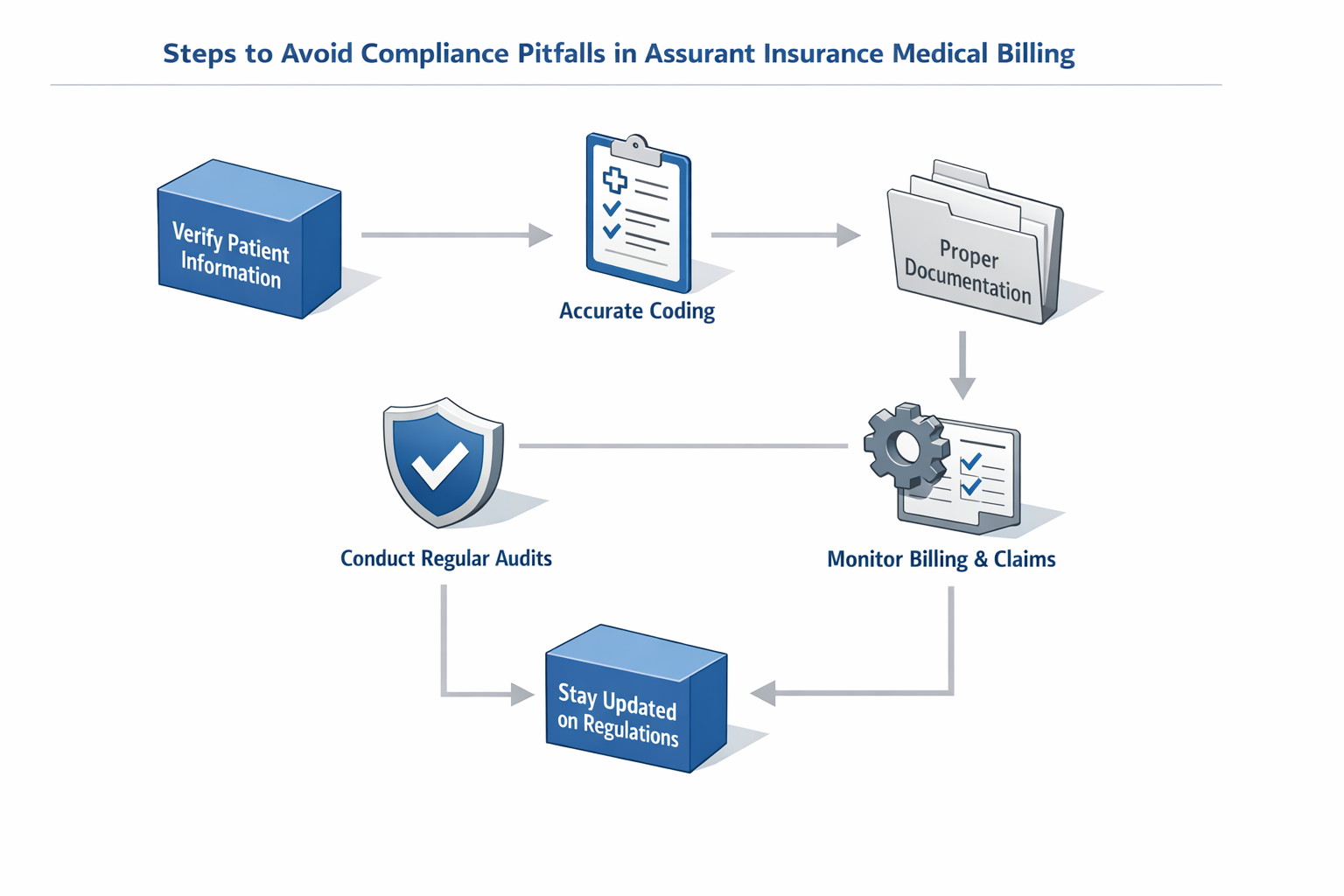
Avoiding compliance pitfalls in medical billing requires a structured approach to documentation, approval workflows, and internal review. The steps below address the recurring issues that trigger rejections and write-downs.
Step 1
Establish pre-approval protocols for external services
Before engaging experts, consultants, or investigators, obtain written approval from the adjuster. Louisiana Division of Administration guidelines require submission of a Request for Expert/Consulting Form, fee schedule, and curriculum vitae before approval is granted. The adjuster notifies counsel once approval is complete. This protocol prevents after-the-fact disputes over whether a service was authorized.
Step 2
Align billing activities with the approved case plan
Billing attorney and adjuster should agree on the proposed activities outlined in the Initial Case Assessment. Louisiana Division of Administration guidelines state that this plan must be updated in subsequent reporting forms. When a billed task deviates from the agreed plan without documentation of adjuster approval, the line item is vulnerable to reduction.
Step 3
Implement quarterly compliance spot checks
Conduct internal reviews of invoices before submission. Judicial Council of California guidelines for third-party administrators specify that compliance is measured through annual technical audits and quarterly spot checks. A practice-level version of this framework—reviewing a sample of invoices each quarter against the carrier's stated prohibitions—catches block billing, unsupported expenses, and narrative gaps before the carrier does.
Coordinate submission with adjuster expectations
Carrier guidelines often require consultation before certain activities proceed. When billing attorney and adjuster have not agreed on the scope of work in advance, the invoice becomes a negotiation rather than a payment request. Updating the case plan in writing as the matter evolves creates a contemporaneous record that supports the billed entries.
Internal audits serve two purposes: they identify entries that fail the carrier's stated standards, and they reveal patterns in how timekeepers describe their work. A quarterly review of ten invoices, scored against the applicable guideline, will show whether the practice is drifting toward block billing or omitting required detail. For more on paralegal billing entry examples, see the linked resource.
Secure client consent for third-party review
When a carrier's billing review process involves disclosure of detailed invoices to a third-party vendor, client consent is required. Virginia Legal Ethics Opinion 1723 addresses procedures that require review of detailed billing invoices by a third party without the insured client's consent or knowledge. Obtaining informed consent before the first invoice is submitted avoids an ethics issue and a potential fee dispute.
The consent conversation should cover what information the reviewer will see, how the reviewer uses it, and whether the client has the right to object to specific disclosures. Documenting that conversation in the engagement letter or a separate consent form is the compliance step; having the conversation and assuming consent is the pitfall.
Tips and Tricks
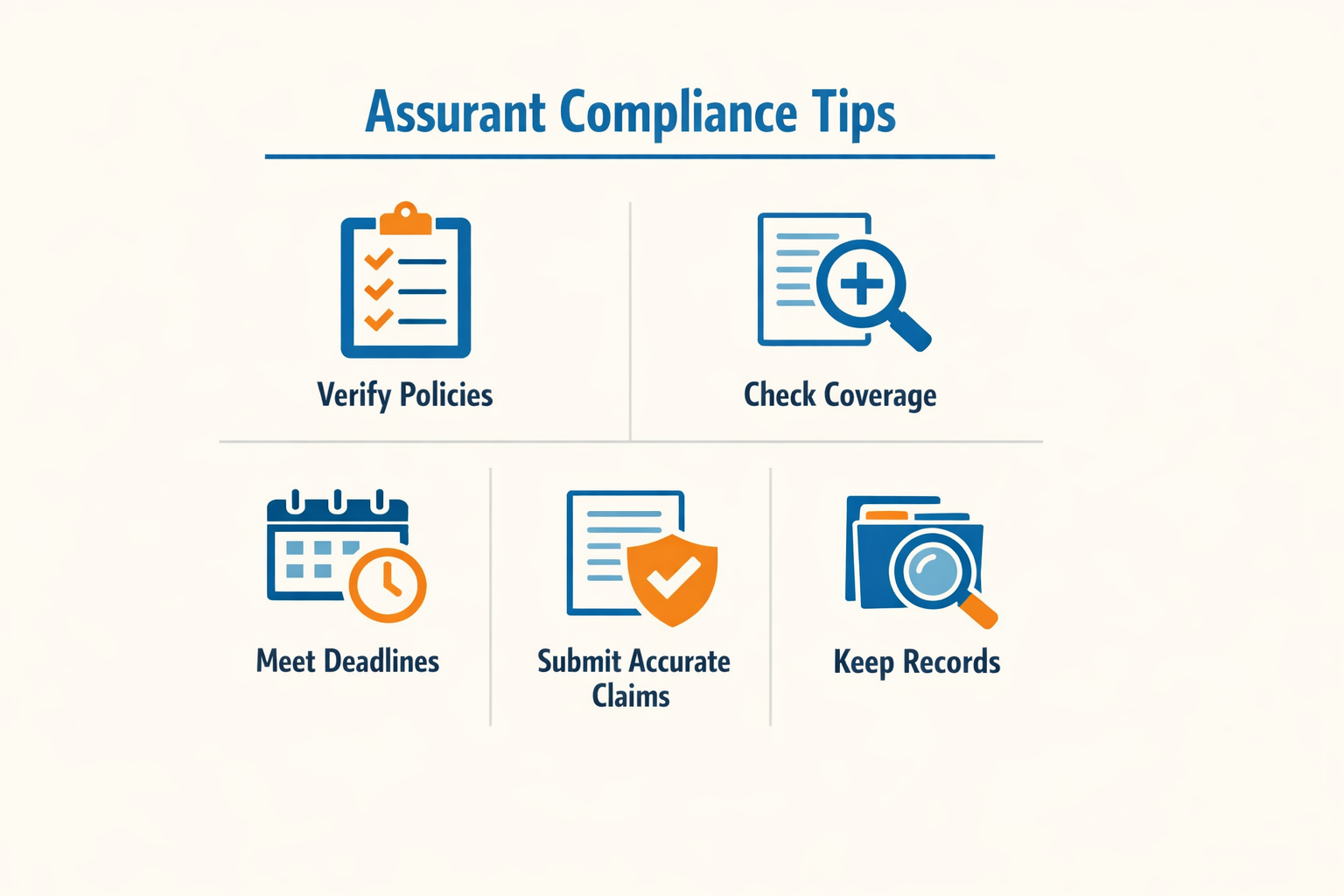
Practical discipline at the point of entry prevents most compliance failures. The guidelines establish a financial relationship; noncompliance with those terms results in nonpayment. That consequence is binary, so the habits that keep an invoice compliant must be equally unambiguous.
Verify Approved Rates Before Any Entry Goes Into the System
Every timekeeper and every line item must carry a rate the carrier has approved in writing. Unapproved rates trigger automatic rejection at portal validation. Check the engagement letter, the panel agreement, or the matter-specific rate schedule before the first entry is recorded, and recheck whenever a new timekeeper joins the file. If a rate is missing or ambiguous, obtain written confirmation before billing a single tenth.
Scrub Narrative Language Against the Guideline's Prohibited-Activity List
Certain phrasing triggers rejection even when the underlying work is compensable. Common traps include references to intra-office conferences billed at attorney rates, administrative tasks described with attorney-level detail, and travel time presented without the required justification or pre-approval. Read the guideline's list of non-reimbursable activities, then search every narrative for those terms before the invoice leaves the firm. When a guideline states that bulk billing is not permitted, each entry must describe a discrete task with a discrete time increment.
It does not meet a specific requirement: bulk billing, prior approval is required, contains phrasing not allowed by client, unapproved rate.
One Rhode Island ethics opinion noted that if a firm believes any billing requirement is inappropriate or not in the client's best interest, those issues must be discussed with the insurer or its designee before submission. That principle extends to narrative standards: when a guideline's language requirement conflicts with what the work actually entailed, resolve the conflict in writing before the invoice goes out, not after it comes back rejected.
Maintain a Pre-Submission Checklist Tied to Portal Validation Rules
Portal rejection codes map directly to guideline violations. A submission checklist should include:
- Approved rate confirmed for every timekeeper
- No block billing (each entry describes one task)
- Narrative free of prohibited phrasing
- Prior approval documented for any entry above the threshold
- Expense codes match the carrier's reimbursable list
- Billing increment matches the guideline (tenth vs. quarter hour)
Run the checklist before the invoice is exported to LEDES format. Fixing a validation error after submission costs time and creates a paper trail that bill reviewers see when the corrected file arrives. For more on structuring compliant narratives, see Sample Attorney Billing Descriptions PDF That Pass Carrier Review. Understanding attorney billing increments also helps prevent format-based rejections.
Step 1
Build the checklist from the rejection codes you have seen
Every portal rejection email contains a code. Collect those codes over six months, map each one to the guideline provision it enforces, then add that provision to the checklist as a yes/no question.
Conclusion
Noncompliance with carrier guidelines results in nonpayment — a consequence that affects both the law firm's revenue and the client relationship. The patterns observed across various carrier guidelines reveal that rejection of travel entries, intra-office conference time, and administrative tasks billed at attorney rates remains a recurring issue. These rejections are not arbitrary; they reflect specific carrier requirements that must be aligned with billing practices.
The data shows that attorneys are struggling more with guideline compliance over time. The percentage of attorneys who reported they are "doing better" with non-billing guidelines dropped from 60 percent in 2020 to 44 percent now, according to the 2024 CLM Defense Counsel Study. With regards to billing guidelines, the decrease was from 74 percent in 2020 to 57 percent now. These are significant drops that underscore the growing complexity of compliance requirements.
Understanding the nuances of LEDES file structures and UTBMS code sets remains crucial for specialty practices. The LEDES Oversight Committee's 98B format page precisely defines the field set, yet some portals accept files that omit fields marked as required by the specification. This drift from the standard can lead to compliance issues if not carefully managed. By staying informed about these patterns and specifications, specialty practices can better navigate the complexities of Assurant Insurance medical billing compliance.
Firms that invest in training, adopt contemporaneous time-entry practices, and regularly audit their invoices against the controlling guidelines will position themselves to avoid the most common pitfalls. For additional guidance on billing practices that meet carrier standards, see Sample Attorney Billing Descriptions PDF That Pass Carrier Review. The administrative burden of compliance is real, but the cost of noncompliance — nonpayment and potential removal from panel counsel lists — is far greater.
Frequently asked questions
What is Assurant Insurance medical billing compliance?
Assurant Insurance medical billing compliance is the practice of submitting invoices that adhere to carrier-specific guidelines, LEDES file format requirements, and narrative detail standards to ensure timely payment and avoid rejections.
How do I avoid block billing rejections in Assurant Insurance medical billing compliance?
Avoid block billing by ensuring each time entry describes a single discrete task with a specific time increment. Never combine multiple activities in one line item, as carriers cannot allocate time across tasks without a breakdown.
Why do carriers reject travel time in Assurant Insurance medical billing compliance?
Carriers reject travel time when it lacks pre-approval, exceeds guideline limits, or is billed at attorney rates instead of the reduced rate specified in the carrier's guidelines. Always confirm the carrier's travel-time policy before billing.
What happens if I use an unapproved rate in Assurant Insurance medical billing compliance?
Unapproved rates trigger automatic rejection at portal validation. The entire invoice is held until the rate is corrected and the file is resubmitted, delaying payment by weeks.
How often should I review my invoices for Assurant Insurance medical billing compliance?
Conduct quarterly spot checks of a sample of invoices against the carrier's guideline prohibitions. This internal audit catches block billing, unsupported expenses, and narrative gaps before the carrier does.