


General Insurance Billing Audits: Key Insights for Providers
Introduction
General insurance billing audits examine every submitted invoice for adherence to outside counsel guidelines, LEDES file structure, and UTBMS code conventions. For providers billing insurance carriers — whether as panel counsel, independent counsel under California Civil Code section 2860, or retained defense firms — the audit is not a formality. It is a line-by-line review that determines whether a time entry survives intact, suffers a reduction, or triggers a rejection requiring resubmission.
As part of the Carrier Ready Knowledge Team, we have examined the mechanics of these audits and the patterns that drive reductions. One recurring observation across carrier guidelines is the frequent scrutiny of entries related to travel, intra-office conferences, and administrative time billed at attorney rates. These categories are flagged not because the work is unnecessary, but because the narrative detail or the task code selection fails to meet the guideline standard.
The use of outside billing review companies has become standard practice for many carriers. According to the 2024 CLM Defense Counsel Study, these review companies rarely return invoices without reductions, and the reductions often hinge on word choice, activity code interpretation, or narrative sufficiency rather than the substantive value of the work performed. The study notes that firms view this process as creating friction in the carrier-counsel relationship, particularly when reductions are perceived as arbitrary or inconsistent with the work actually performed. Carriers that do not use third-party review are described by respondents as more pleasant to work with, though the trend toward centralized bill review shows no sign of reversing.
Understanding the audit process requires familiarity with three interconnected systems: the LEDES file format (typically LEDES 1998B), the UTBMS task and activity code sets, and the specific prohibitions and thresholds in the controlling outside counsel guidelines. A provider who submits an invoice through an e-billing portal is not simply uploading a document — the provider is populating structured data fields that will be parsed, validated, and reviewed against automated rules before any human reviewer sees the file. A missing required field, an invalid task code, or a narrative that triggers a block-billing flag will generate a rejection at the portal level, often before the invoice reaches the claims adjuster or bill reviewer.
For more context on how carriers interpret task and activity codes during review, see our guide to attorney billing descriptions that pass carrier review.
The stakes are operational, not theoretical. A reduction on a single invoice may represent a modest dollar amount, but repeated reductions across multiple matters compound into significant revenue leakage. More importantly, a pattern of rejections signals to the carrier that the provider does not understand or does not follow the published guidelines, which can influence panel status, matter assignment, and the willingness of the carrier to approve future invoices without additional scrutiny.
This article walks through the structure of general insurance billing audits, the common triggers for reductions, and the steps providers can take to prepare submissions that meet guideline requirements on first review. The focus is on what the guidelines actually say, what the e-billing portals actually enforce, and what the bill review process actually looks for when a line item is flagged for reduction.
Understanding the Challenges of General Insurance Billing Audits
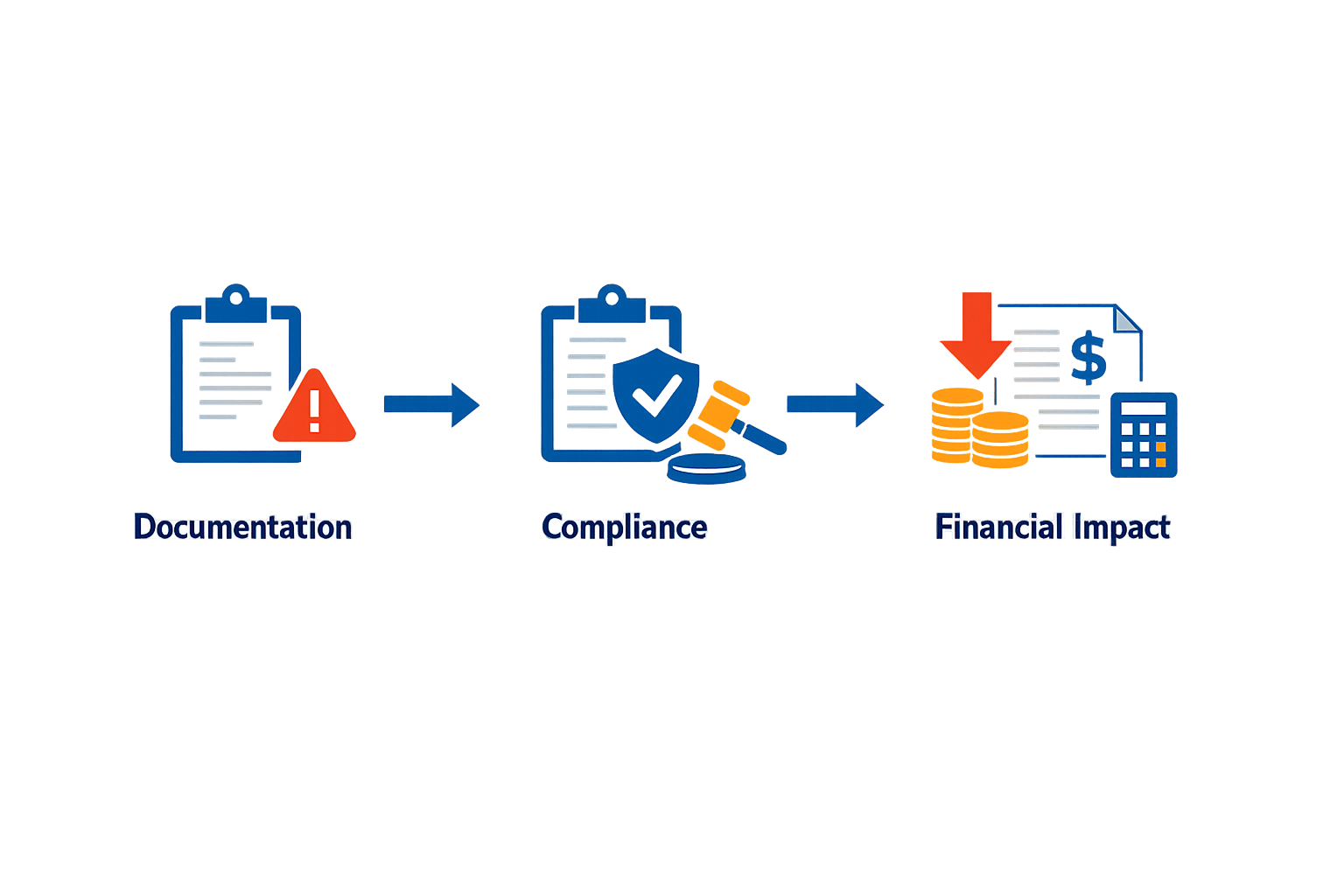
General insurance billing audits surface three recurring pressure points: documentation gaps that trigger automatic rejections, compliance drift across multiple carrier guidelines, and the financial cost of write-downs that follow preventable errors. Each pressure point compounds the others—a missing narrative detail becomes a compliance failure, which becomes a reduction code, which becomes lost revenue.
Documentation Failures That Auditors Flag First
Auditors look for contemporaneous records that tie each line item to a specific task and a specific increment of time. When a timekeeper submits "research and draft motion in limine, 4.2" without breaking out the research component from the drafting component, the entry reads as block billing. Most panel guidelines prohibit block billing explicitly. The auditor reduces the entry or rejects the invoice outright, and the appeal path requires the firm to reconstruct what the timekeeper did four months earlier—often impossible without contemporaneous notes.
Travel time, intra-office conferences, and administrative tasks billed at attorney rates draw scrutiny in nearly every audit cycle. These entries are frequently flagged for reductions because carriers expect them to be billed at paralegal rates or excluded entirely under the guideline's staffing-ratio provisions. A single conference entry reading "discuss case status with associate, 0.3" can trigger a reduction if the guideline requires pre-approval for internal meetings or caps conference time at a percentage of total hours.
Compliance Burden Across Multiple Carrier Divisions
Firms handling matters for multiple carriers or multiple divisions within a single carrier face overlapping and sometimes conflicting guideline requirements. One carrier may require tenth-of-an-hour increments; another may permit quarter-hour rounding. One guideline may cap travel time at the timekeeper's standard rate; another may require a 50 percent discount. The compliance burden across multiple carriers and divisions can lead to increased administrative overhead, which detracts from case work.
E-billing portals enforce some guideline provisions at the validation stage, rejecting invoices that violate formatting rules or exceed pre-approval thresholds. Other provisions—narrative detail standards, staffing ratios, block billing prohibitions—pass through the portal and surface only when the bill reviewer applies reduction codes. The firm learns of the violation weeks after submission, when the matter budget has already absorbed the disallowed time and the timekeeper's memory of the task has faded.
The cheapest compliance error is the one you catch before the invoice leaves the firm.
Financial Repercussions of Preventable Billing Errors
Write-downs erode revenue in two ways: the immediate reduction applied by the bill reviewer, and the opportunity cost of the appeal process. When a firm appeals a reduction, the timekeeper who performed the work must reconstruct the task, draft a response that satisfies the reduction code, and submit the appeal through the e-billing portal. The appeal itself generates non-billable time, and the outcome is uncertain—many carriers cap the total adjustment a firm may recover through appeals in a given year.
Repeated reductions for the same type of entry—block billing, excessive travel time, clerical work billed at attorney rates—signal to the carrier that the firm has not adjusted its billing practices to match the guideline. The carrier may escalate the issue to the panel administrator, request a corrective action plan, or remove the firm from the panel. The financial repercussion extends beyond the individual invoice to the firm's ongoing relationship with the carrier.
For more detail on what specific tasks carriers will and will not pay for, see our Paralegal Billing Cheat Sheet: What Carriers Pay For.
Steps to Navigate General Insurance Billing Audits
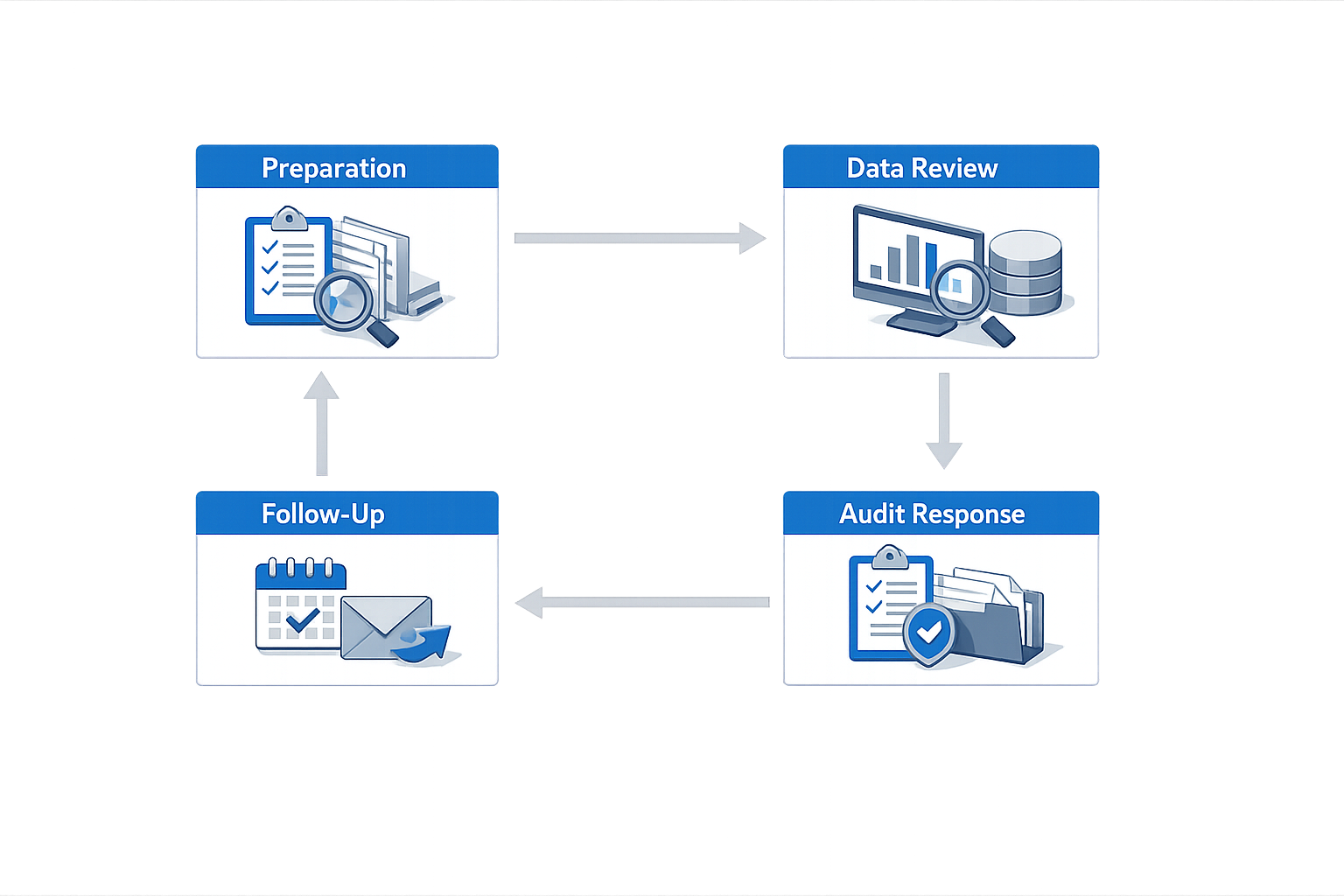
Navigating an insurance billing audit requires methodical preparation and attention to the specific requirements carriers enforce through their outside counsel guidelines. The following steps provide a structured approach to preparing for and responding to audit activity, whether initiated by a carrier's bill review team or through an e-billing portal's automated validation.
Step 1: Review the Controlling Outside Counsel Guidelines
Step 1
Identify the applicable guideline version
Before submitting any invoice or responding to an audit query, locate the carrier's current outside counsel guidelines and note the version number or effective date. Carriers update these documents periodically, and the version in effect when the work was performed governs what can be billed. If the matter file does not contain the guidelines, request them from the carrier or the panel administrator. Do not assume that a guideline from a different carrier or an older version applies.
Once you have the correct document, identify the sections that address billing increments, prohibited activities, narrative detail requirements, and pre-approval thresholds. Mark the pages that list reduction codes or common rejection reasons. These sections will serve as your reference when preparing line items and responding to write-downs.
Step 2: Audit Your Own Invoices Before Submission
Step 2
Conduct an internal pre-submission review
Before uploading an invoice to the e-billing portal, review each line item against the guideline prohibitions. Look for block billing entries, vague task descriptions, administrative work billed at attorney rates, and time increments that do not match the carrier's requirement. If the guideline specifies tenth-of-an-hour increments, round each entry accordingly. If it prohibits intra-office conferences without detail, expand those entries to name the participants and the subject discussed.
This internal audit reduces the likelihood of rejection at the portal validation stage and minimizes the number of reduction codes applied during bill review. It also creates a clean record that supports any appeal if a reduction is applied despite compliance.
Step 3: Prepare Contemporaneous Records and Supporting Documentation
Carriers expect that time entries reflect work performed on the day it occurred, recorded in real time rather than reconstructed weeks later. Maintain daily time records that include the date, timekeeper, task performed, and time spent, and ensure that these records match the narrative detail in the submitted invoice. If the guideline requires that certain expenses be supported by receipts or that travel time be accompanied by an explanation of necessity, gather those documents before submission.
For matters governed by California Civil Code section 2860, where independent counsel has been appointed, the documentation standard is higher. The carrier may request detailed billing records and task-level justifications for any entry that exceeds the guideline's staffing ratio or pre-approval threshold.
Step 4: Submit Through the E-Billing Portal and Monitor Validation Results
Step 3
Upload the invoice and address validation errors immediately
Most carriers require submission through a designated e-billing portal, which validates the invoice file against the LEDES 1998B specification and the carrier's internal rules. Upload the invoice and review the validation report. If the portal flags missing UTBMS task codes, incorrect billing increments, or formatting errors, correct them and resubmit. Do not ignore validation warnings, even if the portal allows submission—these warnings often predict reduction codes that will appear during bill review.
Some portals reject invoices outright for certain violations; others accept them but flag them for manual review. In either case, address the issue before the invoice enters the bill review queue. A clean submission reduces processing time and the risk of across-the-board reductions.
Step 5: Respond to Reduction Codes and Appeal Where Justified
When a carrier applies a reduction code to a line item, the bill review report will state the reason and the amount written down. Review each reduction against the guideline and your contemporaneous records. If the reduction is based on a guideline prohibition and the entry clearly violated that prohibition, accept the reduction and adjust future invoices. If the reduction appears to misapply the guideline or contradicts the work actually performed, prepare an appeal.
The appeal should cite the specific guideline provision, attach the contemporaneous record for the disputed entry, and explain why the reduction is incorrect. Appeals are more successful when they address the carrier's stated reason directly and provide documentation that the auditor did not have during the initial review. For more detailed guidance on crafting billing descriptions that satisfy carrier review standards, see Sample Attorney Billing Descriptions PDF That Pass Carrier Review.
Step 6: Track Patterns and Adjust Billing Practices
After each audit cycle, review the reduction codes applied to your invoices and identify recurring issues. If the carrier consistently reduces entries for intra-office conferences, revise your billing practice to add detail or reduce the frequency of those entries. If travel time is routinely written down, check whether the guideline requires pre-approval or limits travel time to a percentage of the billed matter time.
Tracking these patterns allows you to adjust billing practices prospectively, reducing the volume of reductions in future invoices and improving the predictability of fee recovery. It also builds a record that supports any broader dispute over the carrier's interpretation of its own guidelines.
Conclusion
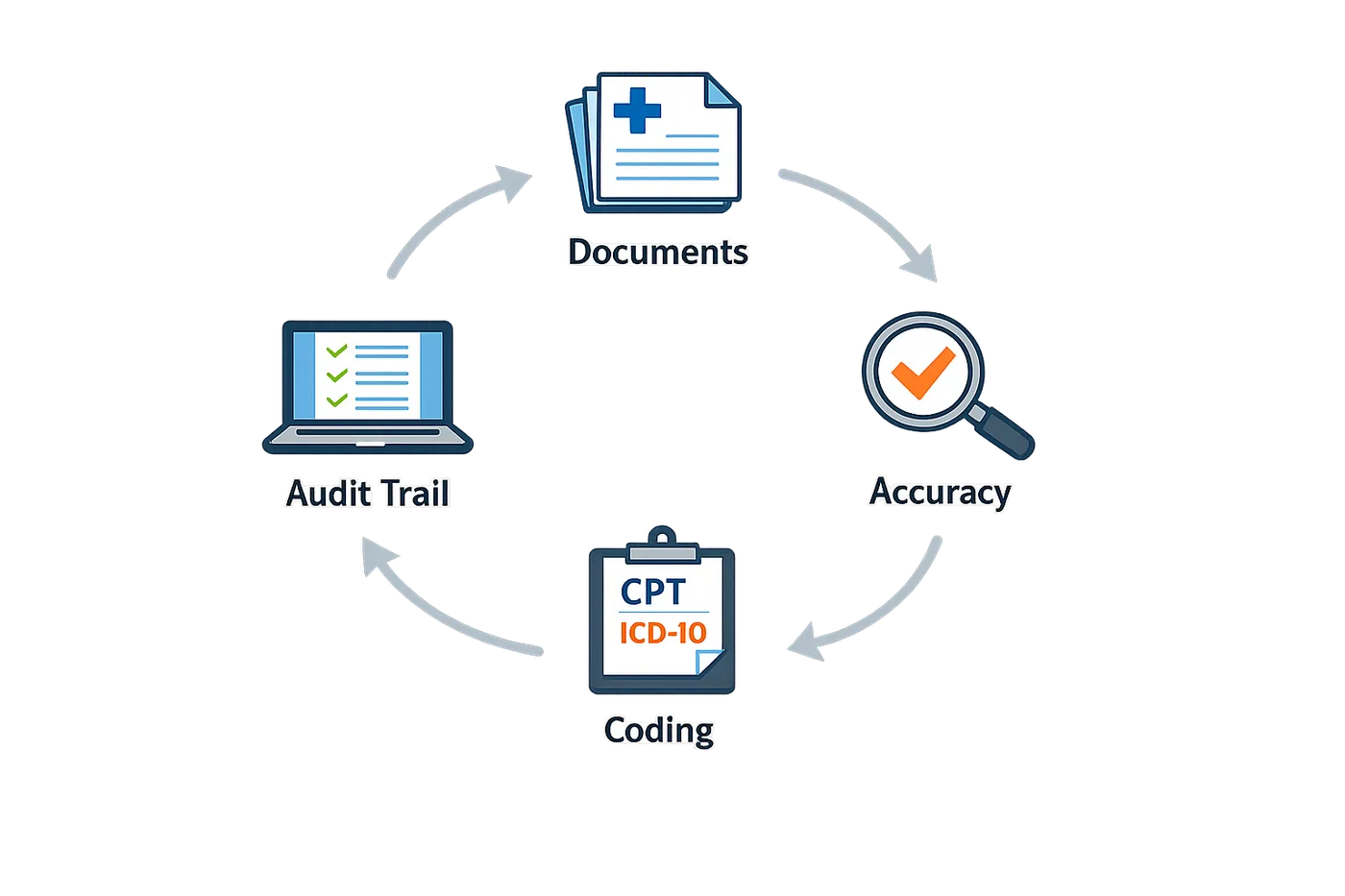
General insurance billing audits demand precision, consistency, and a working knowledge of the standards that govern how carriers evaluate outside counsel invoices. The difference between a clean submission and a reduction-laden write-down often comes down to whether the billing entry names the right UTBMS code, uses the permitted increment, and includes enough narrative detail to survive review. Providers who treat guideline compliance as a box-checking exercise discover the hard way that auditors read line items against the controlling document, not against what seems reasonable.
The strategies outlined in this article — maintaining contemporaneous records, avoiding block billing, pre-approving expenditures above the threshold, and submitting invoices in the carrier's required format — are not theoretical best practices. They are the minimum standard that panel counsel guidelines impose, and they are the difference between payment and appeal. Firms that implement these practices before the first invoice goes out reduce their rejection rate, shorten their payment cycle, and preserve the relationship with the carrier.
As part of the Carrier Ready Knowledge Team, we've observed that the most common audit triggers — travel time billed at attorney rates, intra-office conferences without stated purpose, and administrative tasks coded as legal work — are entirely preventable with front-end training and a disciplined timekeeping system. The carriers publish their guidelines for a reason: they want invoices they can pay without manual intervention. Meeting that standard is not a favour to the carrier; it is how the firm protects its revenue and its standing on the panel.
Providers who invest in understanding outside counsel guidelines for insurance litigation and who train their timekeepers to bill in compliance with those guidelines will navigate audits with fewer surprises and fewer write-downs. The audit is not an adversarial process when the invoice reflects what the guideline permits. It becomes adversarial only when the billing deviates from the standard and the firm is forced to appeal reductions that could have been avoided at the point of entry.
Implement the strategies discussed here. Review your firm's billing entries against the carrier's published requirements before submission. Train your timekeepers to write narratives that answer the auditor's question without forcing them to guess. The firms that do this work up front are the ones whose invoices clear review on the first pass, and whose appeal rate approaches zero. That is the standard to meet.