


Reservation of Rights Letters for Defense Counsel Explained
Introduction
A reservation of rights letter is a formal notice from an insurer to an insured stating that the insurer is providing a defense under the policy but reserves the right to deny coverage later. These letters trigger a cascade of obligations and potential conflicts that defense counsel must recognize and manage. As the Carrier Ready Knowledge Team, we often delve into the nuances of reservation of rights letters and their implications for defense counsel.
When an insurer sends a reservation of rights letter, it signals that the claims in the underlying lawsuit may fall outside policy coverage, or that coverage questions remain unresolved. The insurer agrees to defend the insured but preserves its ability to disclaim coverage based on facts developed during the defense. This creates a structural tension: the insurer-appointed counsel owes undivided loyalty to the insured, yet the insurer paying the bills has a financial interest in outcomes that support noncoverage.
California Civil Code section 2860, subd. (b) addresses this tension directly. The statute provides that "when an insurer reserves its rights on a given issue and the outcome of that coverage issue can be controlled by counsel first retained by the insurer for the defense of the claim, a conflict of interest may exist." This language establishes the threshold for independent counsel: not every reservation of rights letter creates a disqualifying conflict, but when counsel's strategic choices could affect the coverage determination, the insured has the right to select independent counsel at the insurer's expense.
The 1984 decision in San Diego Navy Federal Credit Union v. Cumis Insurance Society, 162 Cal.App.3d 358, established the framework that later became codified in section 2860. In that case, the court held that "an insurer is required to pay for independent counsel for an insured when the insurer provides its own counsel but reserves its right to assert noncoverage at a later date." The court recognized that what defense counsel does in the third-party case directly impacts the coverage case, because coverage often depends on facts developed during the defense. For more on how billing increments and narrative detail requirements apply when independent counsel submits invoices, see Block Billing: Reasons for Carrier Rejections and Solutions.
Defense counsel receiving a case under a reservation of rights letter must evaluate whether the reservation creates a true conflict under section 2860. The statute clarifies that "[n]o conflict of interest shall be deemed to exist as to allegations of punitive damages or be deemed to exist solely because an insured is sued for an amount in excess of the insurance policy limits." These common scenarios do not trigger the independent counsel right by themselves. The conflict must arise from the insurer's reservation on issues where counsel's factual development or legal strategy could shape the coverage determination.
When independent counsel is required, both the insurer-provided counsel and the insured's independent counsel "shall be allowed to participate in all aspects of the litigation," and "[c]ounsel shall cooperate fully in the exchange of information that is consistent with each counsel's ethical and legal obligation to the insured," per section 2860, subd. (f). This cooperative framework recognizes that the insurer retains a legitimate interest in the defense even when a conflict requires independent counsel. The insured and independent counsel must "disclose to the insurer all information concerning the action except privileged materials relevant to coverage disputes," under section 2860, subd. (d).
Understanding these guidelines and legal precedents is essential for defense counsel to navigate potential conflicts of interest and ensure compliance with both statutory requirements and carrier expectations. By examining these documents, we aim to provide clarity and guidance, although it's important to remember that our insights are informational and not legal advice.
Problem Statement
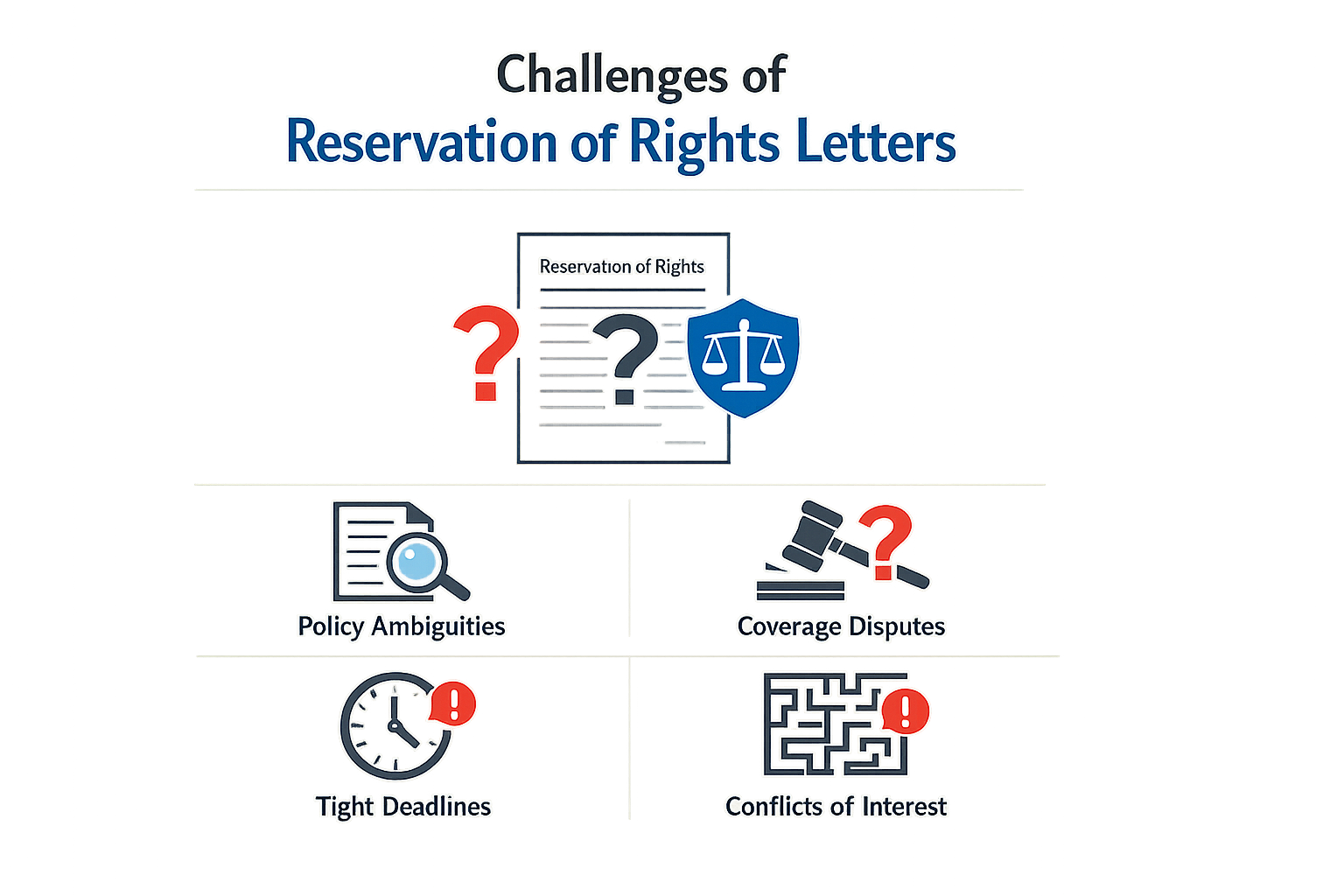
A carrier sends a reservation of rights letter when it agrees to defend a claim but reserves the right to deny coverage later. That single document creates a structural conflict: the carrier's appointed counsel must defend the insured while the carrier evaluates whether to pay the judgment. Defense counsel retained and paid by the carrier now works for a client whose interests may diverge sharply from the payor's interests, and the attorney cannot ignore that tension.
The Conflict Becomes Operational, Not Theoretical
California Civil Code section 2860, subdivision (b) states that a conflict of interest may exist when an insurer reserves its rights on a given issue and the outcome of that coverage issue can be controlled by counsel first retained by the insurer for the defense of the claim. The statute does not say the conflict is speculative or rare — it says the conflict may exist, and when it does, the insured has a right to independent counsel paid by the carrier.
The San Diego Navy Federal Credit Union v. Cumis Insurance Society decision, 162 Cal.App.3d 358, page 363, observed that what the defense attorney does in the third-party case impacts the coverage case, because the questions of coverage depend on the development of facts in the third-party case. When carrier-appointed counsel shapes the factual record — through discovery responses, witness preparation, motion practice, and settlement posture — those choices can determine whether the carrier ultimately owes indemnity. The insured has no control over that attorney's strategic decisions, yet those decisions may cost the insured coverage.
Dual Loyalty and the Limits of Ethical Walls
Carrier-appointed counsel owes undivided loyalty to the insured, but the carrier pays the bills and often expects regular reporting. That reporting obligation — cooperate fully in the exchange of information, per Civil Code section 2860, subdivision (f) — does not override the attorney's duty to the insured, but it creates pressure. An attorney who knows the carrier is evaluating coverage based on the same facts the attorney is developing in discovery faces a choice: prioritise the insured's defence, or shape the record in a way that protects the carrier's coverage position.
The statute acknowledges this pressure and provides a remedy: the insured selects independent counsel, the carrier pays reasonable fees, and the conflict is managed by separating the defence function from the coverage evaluation. Without that separation, defense counsel must navigate dual expectations that cannot always be reconciled. For more on how carriers evaluate and sometimes reject attorney billing under these arrangements, see Block Billing: Reasons for Carrier Rejections and Solutions.
The Insured's Dilemma: Waive or Retain
Civil Code section 2860, subdivision (e) permits the insured to waive the right to independent counsel by signing a prescribed statement. That waiver is not automatic, and it must be informed and voluntary. An insured who signs the waiver accepts carrier-appointed counsel and the conflicts that come with it. An insured who declines to sign triggers the carrier's obligation to pay for independent counsel, but the insured must then select that counsel and manage the relationship.
Many insureds do not recognize the conflict until it materializes — when carrier-appointed counsel recommends a settlement that protects the carrier's reserve position but leaves the insured exposed, or when the attorney's fact development supports a coverage denial. By then, the insured has already participated in discovery, and the factual record is partly set. The reservation of rights letter creates the conflict at the outset, but the consequences unfold over months of litigation.
Nothing in this section shall relieve the insured of his or her duty to cooperate with the insurer under the terms of the insurance contract.
Solution Steps for Defense Counsel
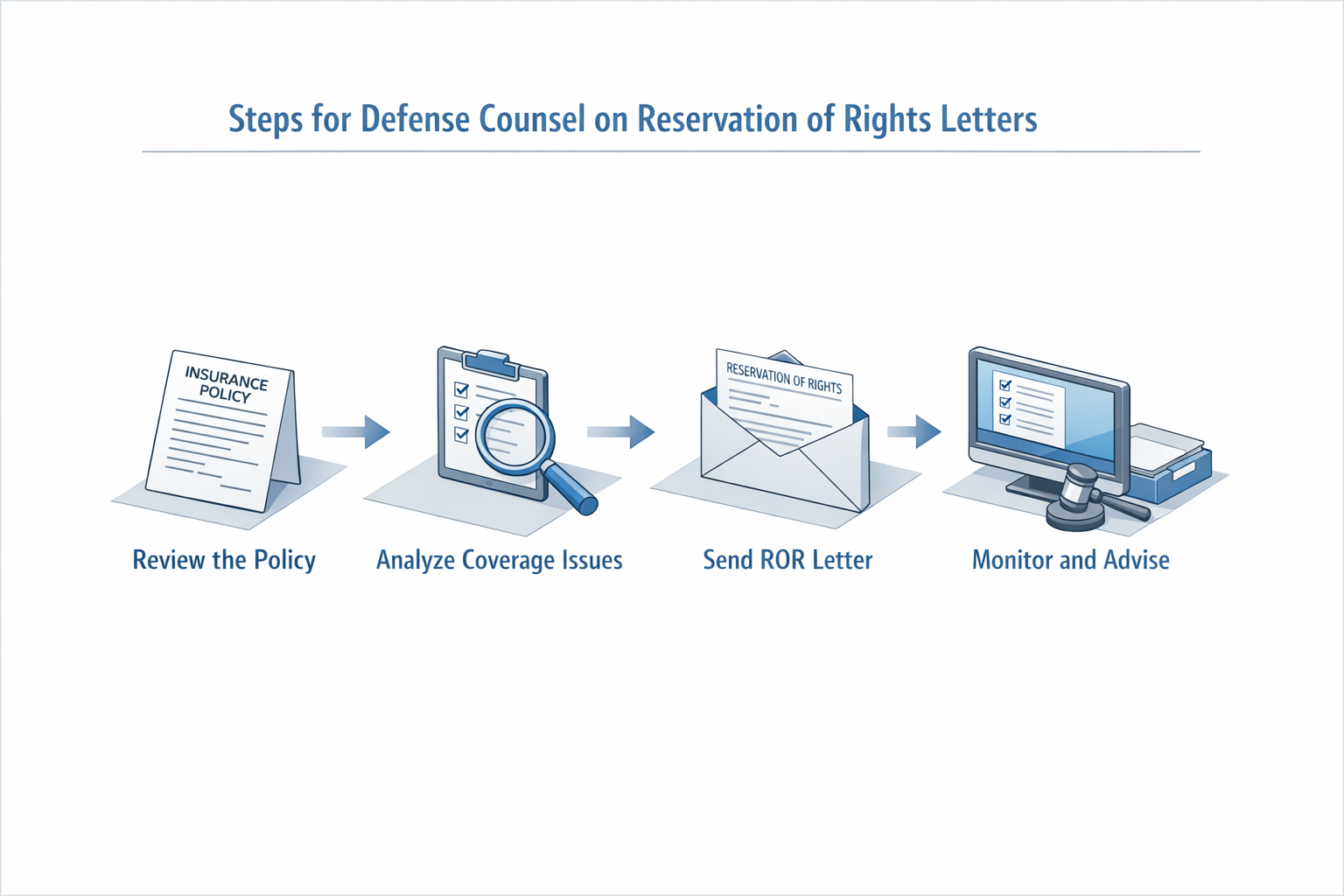
When an insurer sends a reservation of rights letter and assigns panel counsel to defend the insured, defense counsel must take specific steps to protect the insured's interests and comply with statutory requirements. California Civil Code section 2860 establishes the framework: when a conflict of interest arises from the reservation, the insurer must provide independent counsel unless the insured waives that right in writing. The steps below address the procedural and ethical obligations that follow.
Assess Whether a Conflict Exists
Defense counsel's first step is to determine whether the reservation creates a disqualifying conflict. Not every reservation triggers the independent counsel requirement. Section 2860, subdivision (b) specifies that no conflict exists as to allegations or facts for which the insurer denies coverage outright, and no conflict arises solely because the insured is sued for an amount exceeding policy limits or because punitive damages are alleged. A conflict does exist, however, when the insurer reserves rights on an issue whose resolution can be influenced by the defense strategy counsel adopts. For example, if the carrier reserves on whether the conduct was intentional and that determination depends on how counsel develops the factual record, a conflict is present.
Step 1
Review the reservation letter and the complaint
Compare the specific coverage issues the insurer reserved against the allegations in the underlying complaint. Identify any factual or legal questions that overlap: if the way you defend the insured could make coverage more or less likely, a conflict exists under section 2860, subdivision (b).
Step 2
Notify the insured of the conflict and the right to independent counsel
Cal. Civ. Code § 2860, subd. (a) requires the insurer to inform the insured when a conflict arises. Defense counsel assigned by the carrier should confirm that notice was given and ensure the insured understands the option to select independent counsel. If the insured has not received clear notice, counsel must raise the issue with the carrier immediately.
Obtain Written Waiver or Transition to Independent Counsel
Once a conflict is identified, the insured may waive the right to independent counsel by signing the specific waiver language set forth in section 2860, subdivision (e). That waiver must state: "I have been advised and informed of my right to select independent counsel to represent me in this lawsuit. I have considered this matter fully and freely waive my right to select independent counsel at this time. I authorize my insurer to select a defense attorney to represent me in this lawsuit." Any other form of waiver is insufficient. If the insured declines to waive and selects independent counsel, the insurer must pay for that counsel.
Step 3
Document the waiver or coordinate the transition
If the insured signs the statutory waiver, retain the original in the file and provide a copy to the carrier. If the insured selects independent counsel, coordinate the transition: under section 2860, subdivision (f), both the carrier-provided counsel and the independent counsel are allowed to participate in all aspects of the litigation, and both must cooperate fully in exchanging information consistent with their ethical obligations to the insured.
Manage Disclosure and Privilege
When independent counsel represents the insured, section 2860, subdivision (d) imposes a duty on both counsel and the insured to disclose to the insurer all information concerning the action, except privileged materials relevant to coverage disputes. This creates a narrow privilege: information that bears on whether coverage exists may be withheld, but all other case developments must be shared. Any claim of privilege is subject to in camera review by the superior court, and disclosure to the insurer does not waive the privilege as to any other party.
Step 4
Establish a disclosure protocol with the carrier
Agree in writing with the insurer on the frequency and format of case updates. Specify which categories of information will be shared routinely and which may be withheld as privileged. If a dispute arises over privilege, seek an in camera ruling rather than unilaterally withholding information.
Coordinate Defense Strategy and Billing
When both panel counsel and independent counsel participate, section 2860, subdivision (f) requires full cooperation in the exchange of information. In practice, this means joint case conferences, shared discovery, and coordinated motion practice. On the billing side, independent counsel must comply with the same outside counsel guidelines and UTBMS task and activity codes that apply to panel counsel, unless the carrier's guidelines explicitly exempt independent counsel. Many carriers apply the same narrative detail and billing increment standards to Cumis counsel as to panel firms; block billing and vague time entries will trigger reductions regardless of counsel type.
Step 5
Align billing practices with carrier guidelines
Request a copy of the carrier's outside counsel guidelines at the outset. Confirm the billing increment, narrative detail requirements, and any pre-approval thresholds for experts or motions. Submit invoices in LEDES 1998B format with accurate UTBMS codes, and document each entry contemporaneously to avoid block billing rejections.
Tips and Tricks for Navigating Reservation of Rights Letters

Defense counsel facing reservation of rights letters can reduce friction and avoid common pitfalls by following a few practical guidelines. These tips address cooperation, documentation, and ethical boundaries that arise when the insurer reserves its rights while providing a defense.
Document Every Communication with the Insurer
When independent counsel is retained under Cal. Civ. Code § 2860, subdivision (d) requires that counsel and the insured "disclose to the insurer all information concerning the action except privileged materials relevant to coverage disputes." Track every disclosure in writing. If the insurer requests case updates, provide them in a format that preserves a record — email summaries, formal letters, or structured reports. Do not rely on verbal updates alone.
This documentation protects both the insured and counsel if a dispute later arises about whether information was timely shared. It also creates a clear boundary: privileged materials relevant to coverage disputes remain protected, but everything else flows to the insurer.
Clarify the Scope of the Reservation Early
Not all reservations of rights are created equal. Some carriers reserve broadly, citing multiple policy exclusions. Others reserve narrowly, targeting a single coverage issue. Ask the insurer to specify which allegations or claims trigger the reservation and which remain fully covered.
In San Diego Navy Federal Credit Union v. Cumis Insurance Society, 162 Cal.App.3d 358, page 362, the insurer reserved rights on punitive damages and certain breach-of-contract theories but accepted the duty to defend on other claims. Counsel who understood that distinction could allocate effort accordingly. When the reservation is ambiguous, request clarification in writing before significant defense work begins.
Coordinate with Panel Counsel When Both Are Appointed
Cal. Civ. Code § 2860, subdivision (f) provides that "both the counsel provided by the insurer and independent counsel selected by the insured shall be allowed to participate in all aspects of the litigation." The statute further requires that "[c]ounsel shall cooperate fully in the exchange of information that is consistent with each counsel's ethical and legal obligation to the insured."
In practice, this means independent counsel and panel counsel must establish a working protocol early. Decide who will handle discovery responses, who will attend depositions, and who will draft motions. Avoid duplicating work — carriers will not pay two sets of fees for the same task, and duplicative billing invites reductions under most outside counsel guidelines.
For detailed guidance on how carriers review and reduce duplicative line items, see Block Billing: Reasons for Carrier Rejections and Solutions.
Preserve the Insured's Right to Settle
When a reservation of rights is in effect, the insurer's settlement authority may be constrained. If the insurer refuses to settle within policy limits and the insured faces excess exposure, document the insured's position in writing. The insured retains the right to accept a reasonable settlement offer even if the insurer declines, but that right must be exercised carefully to avoid waiving coverage.
Independent counsel should advise the insured of settlement opportunities and the potential for excess liability, but the insured makes the final decision. Keep a contemporaneous record of all settlement discussions, offers, and the insurer's responses.
Nothing in this section shall relieve the insured of his or her duty to cooperate with the insurer under the terms of the insurance contract.
Understand What the Insurer May and May Not Recover
The insured's duty to cooperate continues even when independent counsel is retained. Cal. Civ. Code § 2860, subdivision (f) states that cooperation obligations under the policy remain in force. However, cooperation does not require the insured to share privileged materials relevant to coverage disputes.
If the insurer later seeks to recover defense costs or denies coverage based on facts developed during the defense, the insured may challenge that recovery. The framework for what the carrier may recover is governed by case law, including Hartford Casualty v. J.R. Marketing, 61 Cal.4th 988, which clarifies the limits on an insurer's reimbursement rights. Independent counsel should be familiar with these precedents, as they define the boundary between the insurer's financial interest and the insured's right to a defense.
Conclusion
Reservation of rights letters create a structural conflict that defense counsel must navigate with precision. When an insurer reserves its right to deny coverage while appointing counsel, the appointed attorney faces competing pressures: the insurer pays the fees, but the insured holds the client relationship and may face uncovered exposure. The landmark decision in San Diego Navy Federal Credit Union v. Cumis Insurance Society, 162 Cal.App.3d 358, established that this conflict entitles the insured to independent counsel paid by the carrier — a principle now codified in California Civil Code section 2860.
As the Carrier Ready Knowledge Team, we often delve into the nuances of reservation of rights letters and their implications for defense counsel. These letters are crucial in the insurance defense context, as they notify the insured that the insurer may not cover certain claims under the policy. Understanding the interplay between the reservation, the duty to defend, and the ethical obligations to the insured is essential for any attorney handling insurance defense matters. While our insights are informational and not legal advice, the legal framework is clear: where the reservation creates a conflict, the insured's right to independent counsel is not negotiable.
Defense counsel must recognize that what the attorney does in the underlying action directly affects the coverage dispute. The development of facts, the framing of defenses, and the handling of settlement all carry downstream consequences for both the insured's exposure and the carrier's coverage position. The Cumis court rejected the argument that because the third-party suit does not adjudicate coverage, no conflict exists — the factual record built in the defense shapes the coverage case that may follow.
For billing purposes, counsel should document the reservation, the conflict analysis, and any communications with the insured regarding independent representation. Carriers reviewing invoices will expect contemporaneous records that reflect the attorney's awareness of the conflict and the steps taken to protect the insured's interests. Narrative entries that demonstrate independent judgment and client-focused decision-making are less likely to trigger reductions than entries that suggest the attorney deferred to carrier preferences on matters affecting the insured's uncovered exposure. For more on how carriers evaluate narrative detail and billing compliance, see Block Billing: Reasons for Carrier Rejections and Solutions.
The reservation of rights letter is not simply a procedural formality. It is the document that defines the scope of the conflict, the boundaries of the defense obligation, and the insured's entitlement to counsel whose loyalty is undivided. Defense counsel who treat it as such — and who bill accordingly — protect both the client and the integrity of the representation.