


Block Billing: Reasons for Carrier Rejections and Solutions
Top takeaways
- Block billing groups multiple tasks into a single line item, creating compliance and transparency issues for insurance carriers
- Florida's Justice Administrative Commission may find that block billing entries fail the contemporaneous and detailed accounting requirement under s. 27.5304, F.S.
- Courts have vacated across-the-board reductions for block billing, requiring district courts to explain how the reduction balances the hours actually billed in block format
- Carriers demonstrate openness to alternative billing structures, yet nearly nine in ten report that firms rarely propose them
- Splitting entries into discrete tasks with clear descriptions aligns with carrier expectations and reduces rejection risk
Understanding Block Billing
One entry reading "research and draft motion in limine, 4.2" is enough to trigger a reduction under most panel guidelines. Block billing — the practice of combining multiple tasks or activities into a single narrative with one time total — remains one of the most frequent causes of invoice reductions and rejections by insurance carriers. In navigating the complexities of carrier guidelines, block billing often emerges as a focal point of contention. Our research consistently shows that carriers have varied stances on this practice.
Block billing refers to the consolidation of distinct tasks into a single billing entry. A timekeeper might write "review correspondence from opposing counsel; telephone conference with client; draft response letter" and assign 2.5 hours to that combined narrative. The result is an entry that obscures which activity consumed how much time, making it impossible for a bill reviewer to assess whether each component was reasonable, necessary, or properly staffed.
The Florida Justice Administrative Commission states that a billing containing block billing entries or "on or about" type language may result in a finding that the attorney has failed to maintain a contemporaneous and detailed hourly accounting of time spent on a court-appointed case. This is not a reduction — it is a determination that the billing does not meet the statutory standard for reimbursement.
Federal courts have also addressed block billing in fee disputes. In Welch v. Metropolitan Life Ins. Co., the Ninth Circuit vacated a district court's 20 percent across-the-board reduction for block billing, holding that the district court must explain how or why the reduction fairly balances those hours that were actually billed in block format. The decision confirms that block billing can justify a reduction, but the reduction must be tied to the actual entries at issue, not applied as a blanket penalty.
Carriers demonstrate openness to billing innovation. Nearly nine in ten carriers report that it is very rare for firms to propose alternative billing arrangements of any type. The gap between carrier openness and firm inaction is one of the most persistent disconnects in the litigation management ecosystem, and it suggests that meaningful billing reform — including the elimination of block billing — will need to be driven from the carrier side or adopted proactively by firms that want to preserve reimbursement.
The remainder of this article examines why block billing triggers rejections, what specific provisions in carrier guidelines prohibit or penalize it, and how to split entries into discrete, compliant line items that satisfy both e-billing portal validation and manual bill review.
The Problem with Block Billing
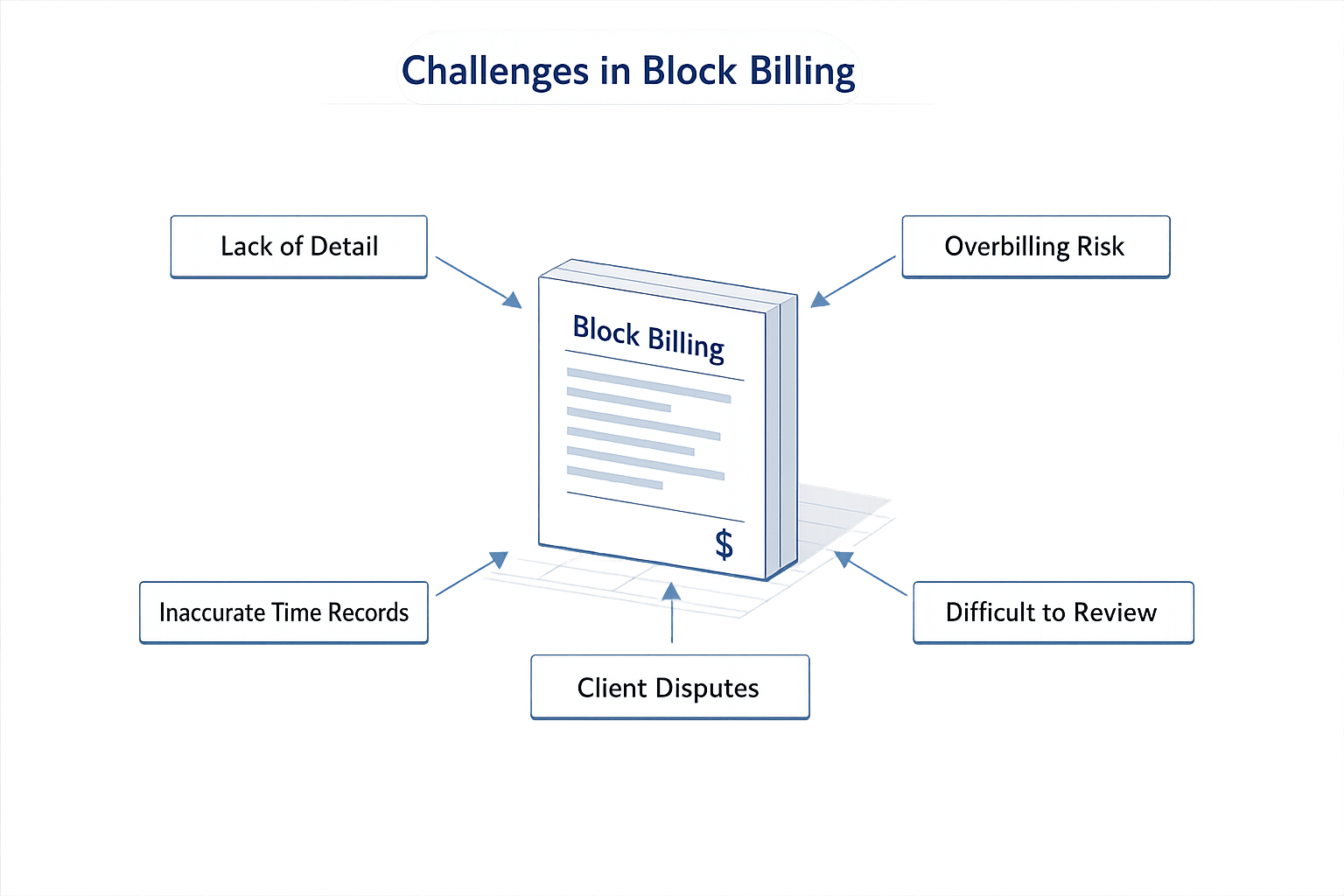
Block billing creates three distinct problems for carriers reviewing invoices. First, it obscures the value of individual tasks, making it impossible to verify whether each activity was necessary or reasonably priced. Second, it prevents accurate application of UTBMS task codes — a single narrative spanning multiple activities cannot be coded to one task without misrepresenting the work. Third, it defeats the purpose of contemporaneous time records, because a block entry written at day's end or week's end is not a real-time account of discrete work performed.
Why Carriers Flag Block Billing
Carriers reject block billing because it prevents them from performing line-item audits. When a timekeeper writes "research case law, draft motion, confer with client, revise motion; 4.5," the reviewer cannot tell how much time went to research, how much to drafting, or whether the conference was necessary. The entry may contain reimbursable work and non-reimbursable work in unknown proportions. Faced with that uncertainty, carriers reduce the entry or reject it outright.
Florida's Justice Administrative Commission states that a billing containing block billing entries may result in a finding that the attorney has failed to maintain a contemporaneous and detailed hourly accounting as required by statute. That language — "may result in" — is typical. Many carriers do not prohibit block billing in the guideline text itself; instead, they write that invoices must contain sufficient narrative detail to permit review, and they apply reductions when the narrative does not permit it.
The Reduction Mechanism
When a court or a bill reviewer encounters block billing, the typical remedy is a percentage reduction applied to the blocked entry. In Welch v. Metropolitan Life Ins. Co., the Ninth Circuit vacated a district court's 20 percent across-the-board reduction for block billing, holding that the court must explain how the reduction fairly balances the hours actually billed in block format. That decision does not prohibit reductions for block billing — it requires that the reduction be justified rather than automatic.
Carriers apply the same principle. A reviewer who sees "review file, telephone conference with opposing counsel, draft correspondence; 2.1" will often reduce the entry by 20 to 50 percent, noting in the reduction code that the narrative lacks sufficient detail. The percentage varies by reviewer and by how much of the entry appears duplicative, clerical, or unsupported. The timekeeper who appeals the reduction must then reconstruct the work from memory or contemporaneous notes — precisely the burden that proper time entry would have avoided.
Why the Defense Bar Has Not Adapted
Nearly nine in ten carriers say it is very rare for firms to propose alternative billing arrangements of any type. That statistic, drawn from the 2026 CLM Litigation Management Study, reflects a broader inertia: defense firms continue to bill in ways that invite reductions, even when carriers have published guidelines that describe the problem and specify the remedy. The sustained inaction across multiple study cycles indicates a persistent disconnect in the litigation management ecosystem — one that carriers are beginning to address through stricter enforcement rather than further guidance.
Steps to Address Block Billing
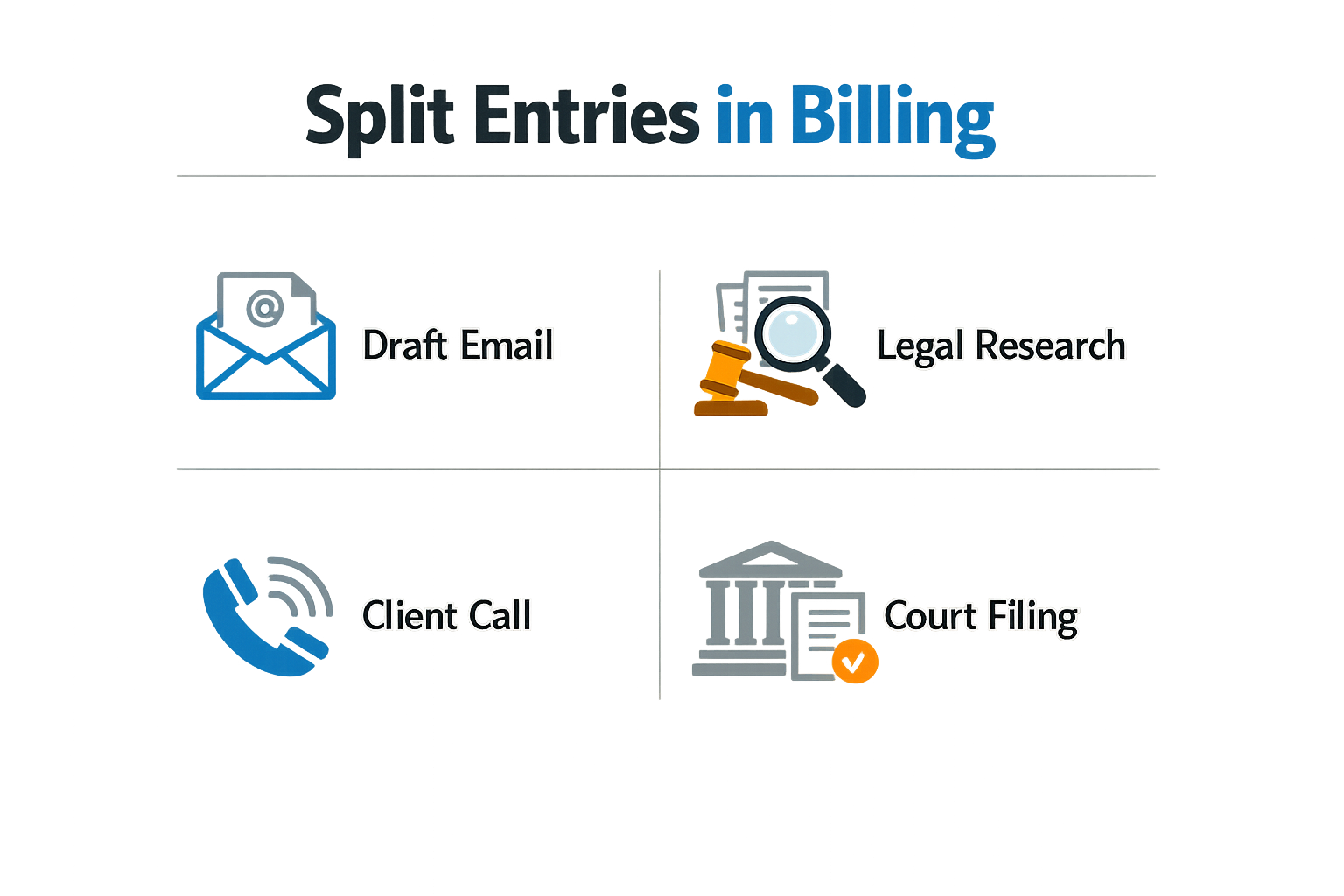
Splitting block billing into discrete line items is not optional when the guideline prohibits it. The process requires a shift in how timekeepers capture work at the point of entry, not a cleanup exercise after the invoice is drafted. Most rejections occur because the narrative lumps distinct tasks into one entry, making it impossible for the reviewer to assign a single UTBMS task code or verify that each activity was necessary.
Break Each Task Into a Separate Line Item
Capture each task at the time it is performed, not at the end of the day. A timekeeper who waits until evening to reconstruct the day's work will default to block entries because memory compresses distinct tasks into a single narrative. Contemporaneous records produce line items that map to individual activities.
Every line item must carry a single task code. If a narrative describes work that spans two codes — for example, legal research (L110) and drafting a motion (L120) — split it into two entries. Bill review software flags entries that require more than one code, and the reduction is automatic.
A compliant narrative states what was done and why it was necessary for the matter. "Research motion in limine issues; draft motion in limine, 4.2" fails because it describes two tasks. "Research evidentiary standards for prior bad acts under FRE 404(b), 1.8" and "Draft motion in limine to exclude prior conviction evidence, 2.4" are two entries, each independently auditable.
Avoid Combining Travel, Communication and Substantive Work
Travel time, telephone calls and intra-office conferences are the most frequently reduced categories when combined with substantive work in a single entry. If a timekeeper travels to a deposition, the travel is one line item (task code A101) and the deposition attendance is another (L210). If a telephone call with opposing counsel leads to document review, the call and the review are separate entries. The guideline treats these as distinct activities with different value, and combining them triggers a write-down.
Use Billing Increments Consistently
Most panel guidelines specify tenth-of-an-hour increments. Rounding every task to the nearest quarter-hour inflates the invoice and creates a pattern that bill review software detects. If a task took eight minutes, bill 0.1 hours. If it took fourteen minutes, bill 0.2 hours. Consistent rounding to 0.25 or 0.5 across multiple entries is a red flag, and it compounds the block billing problem when multiple tasks are combined into one narrative.
Test the Entry Against the Guideline Before Submission
Before the invoice goes to the e-billing portal, read each line item and ask whether it describes one task or several. If the narrative contains a semicolon, the word "and," or a list of activities, it is likely a block entry. The guideline does not require the timekeeper to guess — it states the prohibition in plain language. Arch 2025.5, for example, states at page 15 that block billing is not permitted in any submitted invoice. When the guideline is that explicit, the test is straightforward: one task, one code, one entry.
The cheapest way to avoid a reduction is to split the entry before the invoice is submitted, not after the rejection notice arrives.
Tips for Compliant Billing Practices
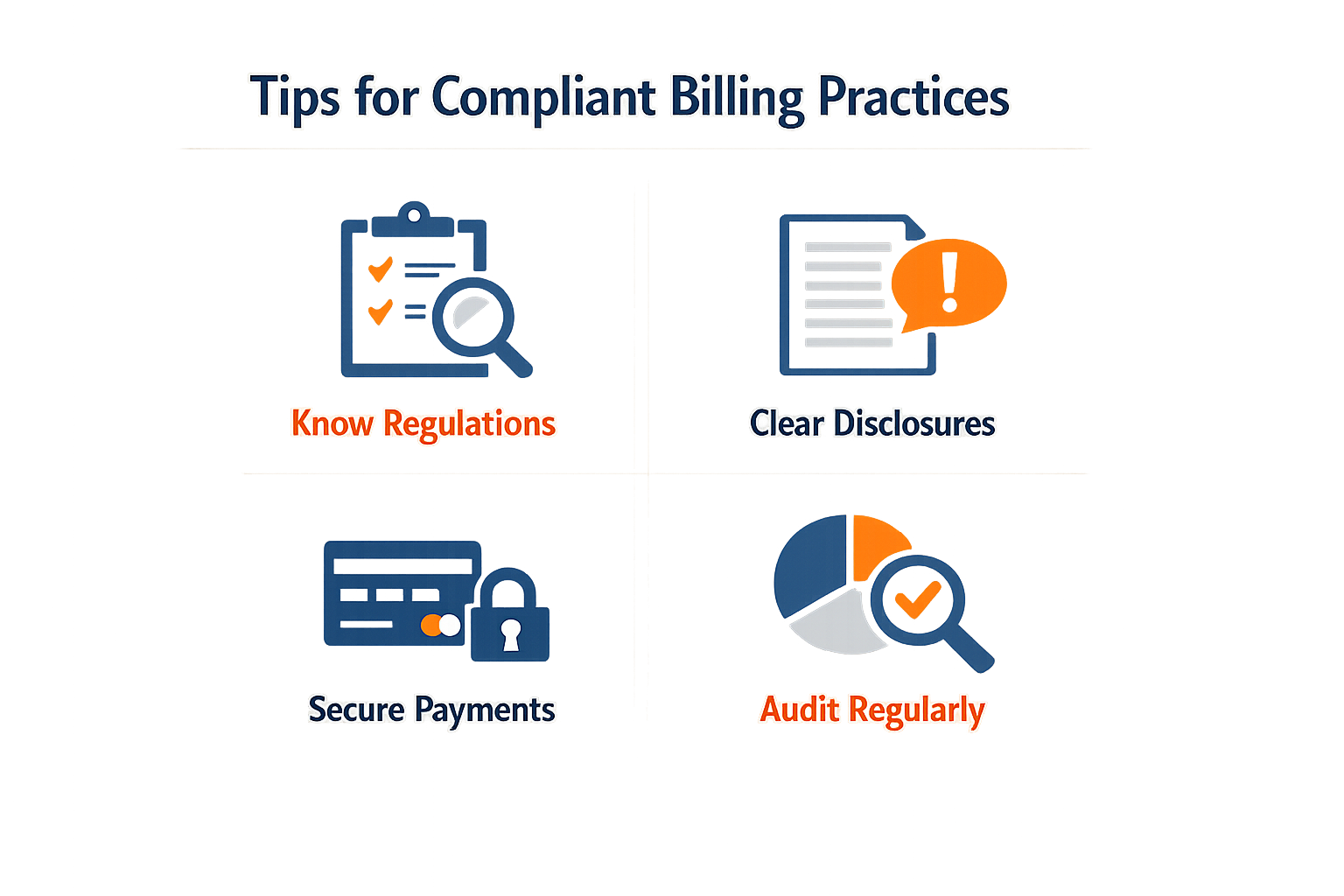
Carriers and bill review companies scrutinize every line item. Entries most often flagged include travel, intra-office conferences, and administrative time billed at attorney rates. Maintaining compliance requires discipline at the point of entry — not after the invoice is submitted.
Record Time Contemporaneously
Timekeepers who reconstruct their day at 5 p.m. produce vague narratives. When you draft a motion, note the task immediately: "Draft motion in limine re expert testimony, 1.4." When you revise it two hours later, record that separately: "Revise motion in limine after partner review, 0.8." Contemporaneous records yield discrete entries. Reconstructed time yields block billing.
Assign One UTBMS Task Code Per Entry
Every line item should map to a single UTBMS task code. If you research law (L200) and then draft a brief (L210) in the same session, split the entry. Combining them forces the narrative to describe two tasks, which is the definition of block billing. Reviewers read task codes before they read narratives; mismatched codes trigger scrutiny even when the narrative is clear.
Avoid Narrative Ambiguity
Phrase each entry to answer: what did you do, and why did the case need it? "Legal research" is ambiguous. "Research choice-of-law issue for summary judgment motion" is not. "Correspondence with client" is ambiguous. "Email to client re deposition scheduling conflict" is not. Specificity protects the entry from reduction.
The narrative must stand alone — a reviewer who reads only that line should know what happened and why it was necessary.
Separate Travel From Substantive Work
Travel time is billed at a reduced rate under most panel guidelines, and it must be entered separately. If you review documents on the plane, record two entries: one for travel (coded to the carrier's travel activity code or UTBMS A101) and one for document review (L310 or the applicable code). Combining them contaminates the travel entry and invites a write-down of the entire block.
Review Entries Before Submission
Before the invoice leaves the firm, read each narrative as if you were the bill reviewer. Ask: does this entry describe one task? Does the task code match? Is the increment consistent with the work described? Entries that survive internal review are far less likely to be reduced. Firms that treat bill review as an external problem rather than an internal discipline generate higher reduction rates and weaker appeal positions.
Build Billing Discipline Into Firm Culture
Compliance is not a timekeeper problem; it is a management problem. Firms that treat guideline adherence as optional generate predictable reduction patterns. Firms that build narrative standards, task-code training, and pre-submission review into their workflow reduce rejections and preserve reimbursement. The defense bar's sustained inaction on billing innovation — despite demonstrated carrier openness to alternative arrangements — suggests that meaningful change will need to be driven from the firm side, not imposed by the carrier.
Conclusion on Block Billing
Block billing remains a persistent friction point between carriers and outside counsel, and the path to resolution is straightforward: split the entry, state what you did, and document the time spent on each discrete task. Carriers with published guidelines have made their expectations clear — one task per line item, sufficient narrative detail to permit independent review, and contemporaneous records that can withstand audit. Meeting those standards is not a concession; it is the baseline for panel counsel seeking timely reimbursement and continued engagement.
The broader context is worth noting. Nearly nine in ten carriers report that firms rarely propose alternative billing arrangements, a pattern that has held constant across multiple study cycles despite demonstrated carrier openness to non-hourly structures. That disconnect suggests the billing-hour convention is sustained more by inertia than by carrier preference. Detailed, task-specific entries do not solve the structural misalignment between hourly billing and outcome-focused litigation management, but they do reduce the immediate friction that triggers reductions, appeals, and strained relationships. When a carrier can read a line item and understand exactly what work was performed, the invoice moves through review faster and the reduction rate falls.
For firms navigating the complexities of carrier guidelines, the patterns are consistent: entries most often flagged for reductions include travel, intra-office conferences, and administrative time billed at attorney rates. The solution is not to avoid those activities — they are often necessary — but to present them in a form that permits independent evaluation. A single line reading "travel to deposition, prepare for deposition, attend deposition, 6.8" will be reduced or rejected under most panel guidelines. Three separate entries, each with a task code, activity code, and narrative sufficient to justify the time, will pass review. The difference is not the work performed; it is the transparency of the record.
Adherence to billing standards is not a constraint on advocacy or a barrier to efficient case management. It is a contract term, and it is the mechanism by which carriers allocate their defense spend across a panel. Firms that treat guideline compliance as a back-office formatting exercise rather than a substantive billing discipline will continue to see reductions, appeals, and delayed payment. Firms that build task-level contemporaneous recording into their timekeeping workflow will see faster reimbursement, fewer disputes, and a cleaner audit trail when fee disputes reach a coverage counsel or a fee arbitrator. The choice is operational, not strategic, and the cost of non-compliance is measurable.